
Blog
Microscopes stand at the forefront of modern diagnostics and research in medicine. From routine clinical tests to advanced molecular studies, high-precision imaging equipment supports the interpretation of biological samples with great accuracy and also allows healthcare professionals to make informed clinical decisions. Such high-quality laboratory imaging equipment is greatly in demand, especially with expanding global healthcare.
Modern medical institutions require microscopes that guarantee reliable optics, stable illumination, and integration with digital platforms. Foreign-trade medical equipment suppliers go a long way in ensuring this demand is met with internationally certified products, technical support, and assurance of maintaining consistent quality for various hospitals, laboratories, and universities globally. With the increasing workload for diagnosis, the reliability and performance of microscopy systems have become of essence as never before.
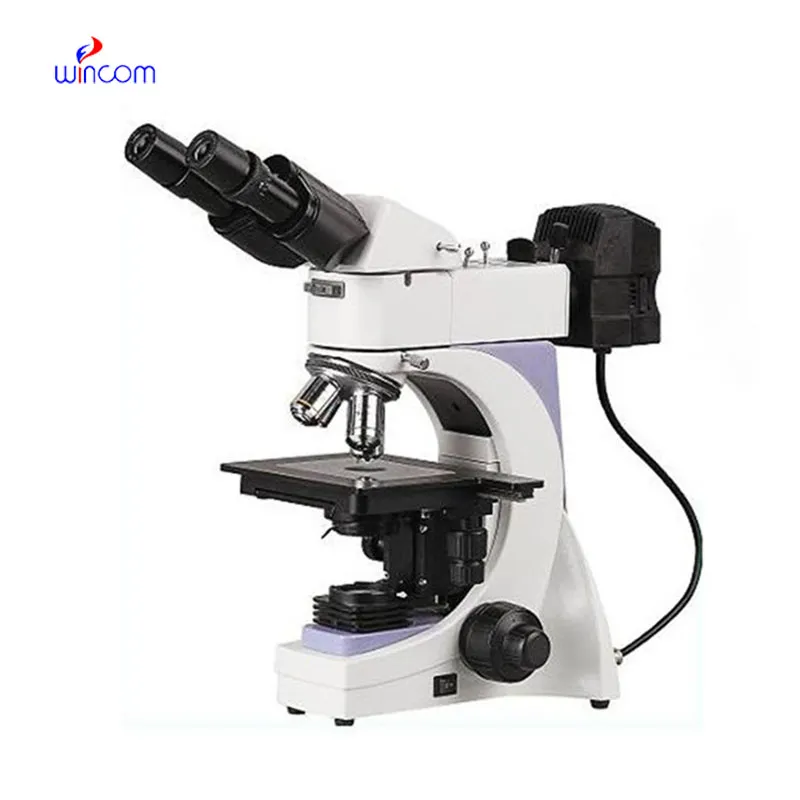
Whereas optical microscopes have historically made cellular structures visible to biological sciences, today's microscopy extends far beyond the simple process of magnification.
New facilities for digital microscopes and fluorescence microscopes enable users to record images at high resolution, apply advanced contrast techniques, and make more precise analyses of samples. On international markets, laboratories are replacing older optical systems with digital solutions that support the recording of images and diagnostics based on software.
This shift demonstrates the increased demand for export microscopes that can provide:
Several trends continue to shape the global demand for modern microscopes:
These developments allow laboratories to provide quicker, more accurate diagnostic work, and exporters have to meet global standards for devices as well as their integration requirements.
Clinical pathology is heavily reliant upon high-performance microscopes for:
For accurate diagnosis, microscopes should provide excellent optical clarity, mechanical stability of stages, and dependable illumination. Many hospitals stress the need for consistency in color temperature and high-quality lenses that can detect even slight abnormalities.
Microbiology applications need microscopes that can differentiate between very minute organisms such as bacteria or fungal structures. They need to have high-magnification objectives, phase-contrast attachments, and flexible lighting systems. Export customers normally pay close attention to:
Histology and cytology require imaging systems that provide stable color reproduction with superior contrast. Modern microscopes utilized in cancer screening or tissue analysis are expected to support internationally accepted imaging software so that clinicians can capture, compare, and store diagnostic images efficiently.
Microscope use in drug-discovery laboratories involves the analysis of cellular responses to new pharmaceutical compounds. Such applications require the:
Microscopes operating under such conditions must withstand constant usage, maintaining their performance at high levels.
Fluorescence microscopy is essential to genetic and molecular studies. Advanced systems support:
The international laboratories often require highly precise filter sets and reinforcing optical structures to fulfill very stringent conditions of experiments.
Accurate diagnosis is highly dependent on clear, high-resolution images. Medical institutions and international buyers require microscopes that have:
For example, the Wincom MCS-M120A metallurgical microscope features a 6V20W halogen lamp with adjustable brightness and several color filters blue, green, yellow, and ground glass. These functionalities support refined imaging for laboratories needing precision.
Hospitals and universities want microscopes that can run for extended periods without much maintenance. In practical terms, this implies that exporters will need to provide devices which can:
Medical institutions expect imported microscopes to be compatible with local:
The key elements in ensuring global compliance include CE and ISO 13485 certifications.
Different regions demand different configurations. Export-ready microscopes often offer:
International microscope suppliers provide much more than just equipment. They also provide:
This comprehensive support helps laboratories implement microscopy workflows more efficiently and reliably.
Medical groups often face challenges such as:
Exporters should, therefore, provide clear installation instructions, offer remote training possibilities, and localized support where feasible.
Microscopes continue to be one of the major tools in modern diagnostics and medical research. Their capacity for visualization of microscopic structures allows clinicians and researchers to diagnose disease, understand cellular functions, and advance medical innovation. Export-oriented companies in medical equipment provide them with dependable devices, meeting international standards to support digital workflows and interface with lab systems.
While the imaging technologies will continuously go through further development, digitalization, automation, and AI-assisted diagnostics, a well-engineered microscope will remain at the core of global healthcare development.
1. Which certificates are required when importing medical microscopes?
CE, ISO 13485, and other local regulatory approvals depending on region.
2. How to Choose the Right Microscope for Clinical Diagnostics?
Consider imaging clarity, illumination type, objective quality, software compatibility, and camera integration.
3. Can microscopes be customized for local needs?
Yes. Models for export normally come with variable voltage, changeable objectives, digital camera ports, and modular components.
4. How long does LED illumination last in modern microscopes?
Most the LED systems are beyond 20,000 hours of stable operation.
5. How can I ensure safe transportation when importing optical instruments?
Choose suppliers using vibration-resistant packaging and providing pre-shipment alignment checks.
E-mail: [email protected]
Tel: +86-731-84176622
+86-731-84136655
Address: Rm.1507,Xinsancheng Plaza. No.58, Renmin Road(E),Changsha,Hunan,China


 EN
EN
 af
af
 es
es
 ar
ar
 tr
tr
 sw
sw
 pt
pt
 th
th
 ur
ur
 bn
bn
 ne
ne
 vi
vi
 km
km
 lo
lo
 de
de
 ru
ru
 fi
fi
 nl
nl
 fa
fa
 fr
fr
 ko
ko


