
Blog
Endotracheal tube selection remains a critical decision in modern healthcare. Endotracheal tubes (ETTs) play a vital role in airway management and life support. Correct tube selection directly impacts patient outcomes, while incorrect choices can lead to severe complications. The medical industry currently sees a rising global demand for these devices in ICU, emergency, surgical, and prehospital settings. The market is experiencing a profound shift. Medical professionals no longer view ETTs as simple commodity products. Instead, clinicians now treat them as precision clinical devices.
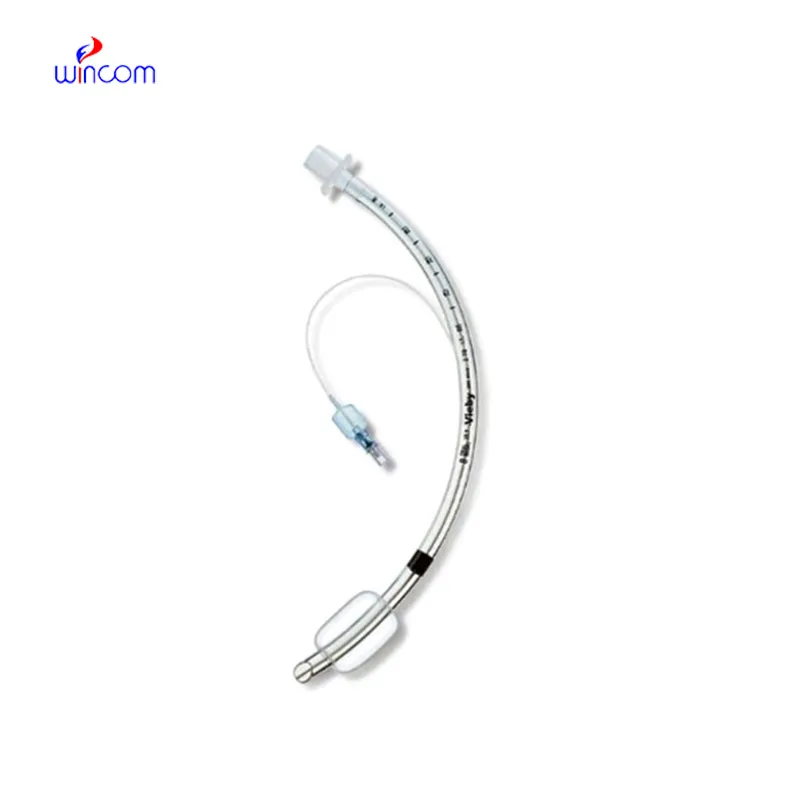
The endotracheal tube features a specific basic structure. These components include a tube shaft, a bevel tip, and a Murphy eye. The device also includes a connector and an inflation line. Cuffed versions contain a specialized cuff system and a pilot balloon.
Manufacturers offer common materials and design variations to suit different needs. Clinicians often choose between PVC and silicone tubes. Medical teams also select between reinforced (armored) and standard tubes. Finally, healthcare facilities must weigh disposable versus reusable considerations based on their protocols.
This section serves as an ET tube selection guide to build clinical authority.
Medical professionals must learn the correct methods to size measurement. They conduct measurements of both internal diameter and external diameter. The industry uses standard sizing units based on millimeters for the internal diameter, which measures 1 millimeter ID. The internal diameter directly dictates the resistance to airflow and the patient's overall work of breathing. The external diameter determines whether the tube can safely pass through the delicate vocal cords without causing trauma. Manufacturers display these essential measurements on the tube's side, which enables immediate visual identification.
Adult size selection guidelines follow specific, evidence-based rules. Doctors rely on general recommendations for male versus female patients. Adult males typically require an internal diameter between 7.5 mm and 8.5 mm. Adult females generally need a slightly smaller tube size ranging from 7.0 mm to 7.5 mm. Clinicians also make adjustments based on the patient's anatomy and clinical condition. Medical staff often utilize patient height as a highly reliable indicator of airway size rather than relying solely on overall body weight.
The medical field needs to give dedicated attention to pediatric and neonatal medical needs. The physicians use age-based formulas as their primary method to determine accurate body size measurements. The standard procedure requires medical professionals to divide the patient's age by four and then add a specific baseline number to find the correct internal diameter measurement. Weight-based selection methods serve as essential tools for pediatricians who treat both infants and premature neonates. The medical field requires airway measurements because even minor errors can lead to dangerous situations during surgery. The slight difference of 0.5 millimeters causes a substantial rise in airway resistance, which severely limits a small child's ability to breathe.
Selecting the wrong size carries significant risks. A tube that is too large can cause severe airway trauma and permanent vocal cord damage. Oversized tubes apply excessive physical pressure against the fragile mucosal lining of the trachea. Conversely, a tube that is too small often leads to dangerous air leakage and inadequate ventilation. Small tubes also complicate the suctioning of thick respiratory secretions and significantly increase the patient's breathing effort over time.
Procurement teams face high-value decision-making when comparing cuffed vs uncuffed endotracheal tubes.
A cuff is an inflatable balloon located near the distal tip of the tube. It works by sealing the lower airway for effective, positive-pressure ventilation. The clinician inflates the internal cuff using a connected pilot balloon located outside the patient's mouth. The cuff also provides a crucial physical barrier for preventing aspiration. This reliable seal stops stomach contents or oral secretions from entering the vulnerable lungs during medical procedures.
Manufacturers design different types of cuffs for various clinical scenarios. Hospitals frequently utilize high-volume, low-pressure cuffs today. These modern designs distribute the sealing force safely over a wider area of the tracheal wall to prevent ischemic damage. Buyers can also choose between tapered and cylindrical designs. Tapered cuffs demonstrate superior performance in blocking hazardous micro-aspiration compared to traditional cylindrical shapes.
A strict clinical comparison helps clinicians make the right choice. Each option presents distinct advantages and limitations. Doctors historically preferred uncuffed tubes for small children to avoid damaging the narrow, developing cricoid ring. Modern medicine currently shows a clear preference for cuffed tubes as part of pediatric airway evolution. Micro-cuffed pediatric tubes allow for lower gas flow rates, highly precise ventilation control, and significantly reduced operating room pollution.
Cuff pressure management is absolutely essential for sustained patient safety. Clinicians must meticulously maintain recommended pressure ranges throughout the intubation period. Medical standards typically set this range between 20 and 30 centimeters of water (cm H2O). Overinflation presents serious risks, including severe tracheal injury and permanent tissue necrosis. Underinflation creates dangerous leaks and drastically increases the risk of ventilator-associated pneumonia. Hospital staff must employ precise monitoring techniques to verify cuff pressure continuously. Respiratory therapists use specialized handheld manometers to measure and adjust this pressure during every clinical shift.
Patient-specific factors heavily dictate equipment choices. Medical staff must thoroughly evaluate the patient's age, gender, and unique airway anatomy before attempting intubation. Doctors must also factor in underlying conditions such as physical trauma, localized edema, or severe obesity. Obese patients often present with decreased functional lung capacity, which makes establishing a rapid and secure cuffed airway absolutely vital. Trauma patients with complex facial injuries might require smaller tubes to navigate swollen or physically distorted airway passages safely.
Procedure-specific needs also determine the correct endotracheal tube types. The specific surgery type, including ENT, thoracic, or general anesthesia, demands unique tube characteristics. Ear, nose, and throat (ENT) surgeries often utilize pre-bent tubes that effectively keep the breathing circuit completely out of the active surgical field. Thoracic surgeries require sophisticated double-lumen tubes to isolate and ventilate each lung independently. The clinical setting also matters greatly when comparing controlled ICU environments versus highly chaotic emergency intubation protocols.
Ventilation requirements add another critical layer of complexity to equipment selection. Critical care patients sometimes require high-pressure ventilation scenarios to maintain adequate blood oxygen levels. Severe respiratory illnesses demand robust cuff seals to prevent gas escape during intense mechanical support. Medical teams must also proactively plan for long-term versus short-term intubation needs. Long-term ICU patients benefit significantly from tubes featuring specialized materials that resist dangerous bacterial buildup and actively reduce infection risks over several weeks of continuous use.
Complex surgeries require specialized endotracheal tubes and their applications. Reinforced (armored) tubes provide essential surgical flexibility. Double-lumen tubes allow for precise lung isolation during thoracic procedures. Surgeons prefer preformed (RAE) tubes for head and neck procedures. Subglottic suction tubes deliver excellent performance for infection control in critical care units.
Quality assurance defines professional authority in this industry. Medical devices must possess key certifications, including ISO, CE, and FDA approvals. Airway management devices must strictly meet sterility and biocompatibility standards. Manufacturers must also adhere to rigorous packaging and labeling requirements for global distribution.
Healthcare providers sometimes make preventable errors during airway management. One common error involves choosing size based only on habit, rather than prioritizing thorough patient assessment. Another major safety risk involves ignoring cuff pressure monitoring entirely. Caregivers sometimes risk patient safety by using non-compatible connectors or accessories. Ultimately, inadequate staff training in airway management contributes significantly to these clinical mistakes.
Choosing an intubation equipment supplier is a critical business decision
Buyers must establish strict key evaluation criteria. Procurement managers should thoroughly review the supplier's manufacturing standards and certifications. Buyers demand consistency in tube dimensions and materials across every batch. The quality of cuff performance and sealing is non-negotiable for patient safety.
B2B buyers should evaluate a supplier's OEM/ODM capabilities. Premium manufacturers offer custom sizing and markings for specific markets. They also provide flexible branding and packaging options. An expert supplier delivers vital regulatory support for different markets.
Supply chain reliability ensures continuous hospital operations. Procurement teams must verify the supplier's bulk production capacity. Buyers should also confirm the lead time and logistics for international buyers.
Precision in selection leads to better outcomes across all healthcare settings. The medical formula remains clear: size plus cuff plus clinical context equals the optimal choice. We strongly emphasize the importance of standardized, high-quality products. We actively encourage clinical and administrative teams to make informed procurement decisions.
We invite global buyers to partner with a trusted manufacturer. Please contact our team to request product catalogs and technical datasheets. You can easily order samples for evaluation at your facility. Our engineering team is ready to discuss OEM/ODM customization for your brand. We highlight several key advantages for our B2B partners. We provide highly competitive pricing for bulk orders. Our products hold strict international certifications. Our company possesses decades of reliable export experience. To secure premium airway management devices, please explore our comprehensive inventory at China Wincom Endotracheal Tubes.
Contact us: China Wincom
The internal diameter (ID) measures the hollow space inside the tube, which dictates the airflow volume. The external diameter (OD) measures the total width of the tube from the outside, which determines if the tube can safely pass through the patient's vocal cords. Standard medical sizing primarily relies on the ID in millimeters.
High-volume, low-pressure cuffs provide a broad surface area against the tracheal wall. The design creates a ventilation seal which maintains pressure distribution through the entire system. The system distributes pressure to avert the possibility of blood flow interruption which results in ischemic damage to tracheal tissues.
Clinicians select reinforced tubes because surgical procedures will require them to move a patient's head and neck, while surgical instruments will create conditions that block their patient's airway. The armored tube contains a wire coil that stops the device from bending or collapsing when it faces external force.
The cuff becomes overinflated, which creates excessive pressure that damages the fragile tracheal lining. This extreme pressure can obstruct capillary blood flow which rapidly leads to tissue necrosis, mucosal ulceration, and long-term tracheal stenosis.
Procurement teams verify quality by auditing the supplier's manufacturing certifications, which include ISO, CE, and FDA approvals. The team assesses product dimension consistency, evaluates the supplier's ability to produce goods at high volume, and requests physical samples to assess cuff performance before making bulk purchases.
E-mail: [email protected]
Tel: +86-731-84176622
+86-731-84136655
Address: Rm.1507,Xinsancheng Plaza. No.58, Renmin Road(E),Changsha,Hunan,China


 EN
EN
 af
af
 es
es
 ar
ar
 tr
tr
 sw
sw
 pt
pt
 th
th
 ur
ur
 bn
bn
 ne
ne
 vi
vi
 km
km
 lo
lo
 de
de
 ru
ru
 fi
fi
 nl
nl
 fa
fa
 fr
fr
 ko
ko


