
Blog
Medical waste disposal is an important issue that has gained significance in hospitals and other healthcare facilities around the world. This is because the growth of healthcare facilities and the increase in the number of patients being treated are matched by the growth of healthcare waste. With the increase in the healthcare waste being generated on a daily basis due to the disposal of items like gloves, syringes, samples, and personal protective equipment (PPE), there is potential for significant health risks and other problems associated with improper disposal of the same.
Hospitals and labs are also being scrutinized by regulation bodies concerning the management of medical waste. Guidelines from national and international bodies dictate that medical waste be specially categorized, labeled, and disposed of. Hospitals thus found to be in violation of these guidelines risk being fined, sued, and also develop a tainted reputation. Hospitals today are therefore embracing new technologies in handling their medical waste.
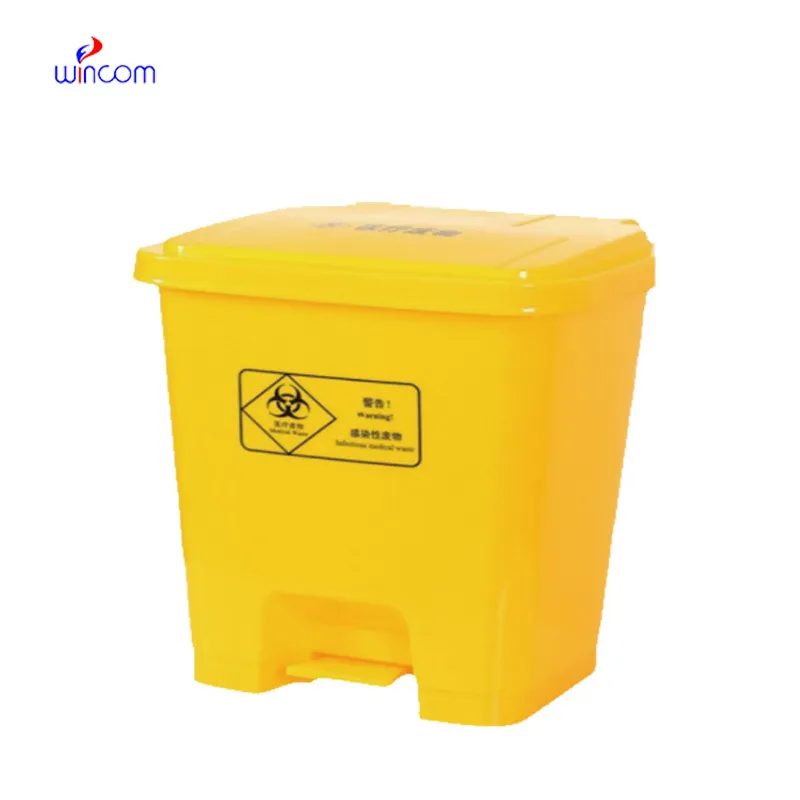
Although the rules are in place, the treatment and disposal of waste in hospitals are still very complex. This is because hospital waste comprises infectious waste, sharps, chemicals, or biohazards. Some of the key factors include:
These challenges show that there is a need to develop efficient and effective solutions to address the demands placed on modern health care waste management.
The introduction of smart technology in waste management processes has transformed hospital and lab practices. Intelligent trash cans, used in disposing medical waste, could be equipped with sensors that track their fill level in real time. When these bins are full, notification signals are instantly sent to waste management personnel, which improves waste management in hospital labs.
Standardization is important when it comes to managing waste in a healthcare facility. Colored bins that are tailored to dispose of different types of medical waste, such as sharps, infectious, and chemical, help a facility comply with set standards. Organized segregation systems help prevent mistakes, are safer for staff, and promote efficient transportation to treatment plants.
Healthcare organizations are also moving towards sustainable solutions that could work to mitigate environmental effects. Using non-disposable medical waste containers is a good example, as these containers can be reused as opposed to plastic products that could also contribute to pollution when discarded.
Through the integration of smart monitoring and sustainable efforts, laboratories and hospitals are able to enhance efficiency and sustainability performance.
The Wincom Medical Waste 240L WN-W240 is an ideal solution for healthcare facilities seeking reliable, compliant, and high-capacity waste management options.
The WN-W240 is specifically designed for the treatment of the issues involved in hospital and laboratory waste disposal:
In relation to the traditional low-capacity containers and non-specialized containers, the Wincom 240L bin importantly improves efficiency while ensuring that the necessary safety is maintained.
By integrating large-capacity containers, such as Wincom’s 240L, with intelligent monitoring technology, workers are able to monitor levels in a completely real-time fashion. The automation of notifications eliminates any possibility of overflowing and offers a safe operating environment in a medical and laboratory context.
Training in the correct manner of waste segregation, handling, and disposal is a necessary task. The staff needs to be made aware of the requirements for disposal of sharp items, infection waste, and chemical substances.
Sustainable Healthcare Waste Management practices minimize adverse environmental impacts and, during the same process, also help to lower costs. These practices can be achieved by implementing concepts such as the use of recycle bins, routing optimization, and material segmentation for recycling. Organizations that implement these processes also reflect a sense of business responsibility.
Institutions can further improve the efficiency achieved through the optimization process by identifying waste generation points and planning collection routes. This ensures minimal labor, reducing interruptions for the labor force, thereby making the waste disposal process in the hospital more effective.
Medical waste management no longer relates to the disposal of waste by medical institutions only. Medical garbage management must be an efficient process with considerations of all aspects: security, authorized disposal, efficiency, as well as environmental protection. The Wincom 240L Medical Waste Bin can be an efficient tool in this process.
By embracing new ideas, like smart monitoring, segregation, and sustainable methods, healthcare facilities like hospitals and laboratories could have safe, efficient, and sustainable medical waste management systems. Healthcare facilities that use quality medical waste management systems not only maintain patient safety but also increase levels of efficiency.
A1: The Wincom WN-W240 comes with a 240-liter capacity, which is best suited for high-level hospital and laboratory wastage.
A2: Yes, it is meant for lab and hospital use; it aids segregation of waste.
A3: The bin consists of plastic that withstands corrosion and can be easily maintained.
A4: This design facilitates the normal labeling, segregation, and collection practices associated with medical regulations.
A5: Yes, since its capacity to store waste is large; hence it reduces the frequency of collection.
E-mail: [email protected]
Tel: +86-731-84176622
+86-731-84136655
Address: Rm.1507,Xinsancheng Plaza. No.58, Renmin Road(E),Changsha,Hunan,China


 EN
EN
 af
af
 es
es
 ar
ar
 tr
tr
 sw
sw
 pt
pt
 th
th
 ur
ur
 bn
bn
 ne
ne
 vi
vi
 km
km
 lo
lo
 de
de
 ru
ru
 fi
fi
 nl
nl
 fa
fa
 fr
fr
 ko
ko


