
Blog
In hospitals, clinics, laboratories, and research institutions, efficiency often depends on the performance of basic medical consumables. Large equipment may receive the most attention, but many daily procedures rely on smaller items that support safe transfer, smooth connection, and reliable handling. Among these practical essentials, the body connecting tube stands out as a simple yet highly useful product.
For international buyers, a product like this is important not because it is complex, but because it is adaptable. A well-designed tube can serve multiple clinical and institutional needs, help streamline workflow, and support routine procurement across different departments or customer groups. As a medical, laboratory, and hospital equipment export company, we understand that overseas buyers are often looking for products that combine practical function with supply convenience and repeat-order suitability.
This article explores the versatility of the body connecting tube in research and clinical settings, helping hospitals, clinics, labs, and distributors understand why this type of product remains an important part of modern medical supply systems.
In healthcare and laboratory environments, connection is a critical part of everyday work. Whether the task involves fluid transfer, supportive feeding, sample-related handling, or routine bedside care, reliable connecting components help ensure that procedures can be carried out smoothly and safely.
These products may appear simple, but their role is often essential. A workflow can only function efficiently when all parts of the system work together, including the smaller disposable or semi-disposable items that support transfer and connection tasks. If such consumables are difficult to handle, inconsistent in specification, or unsuitable for the intended use, they can create delays, inconvenience, and procurement challenges.
That is why connection-related medical consumables remain in steady demand. The body connecting tube is one example of a foundational product that supports practical care and handling needs in a wide range of settings.
When discussing medical consumables, the word versatility means more than simply “can be used in many ways.” In real institutional purchasing, versatility means a product can adapt to different departments, different users, and different workflow requirements without creating unnecessary complexity.
For hospitals and clinics, this may mean a tube that can support different routine procedures depending on size and application needs. For laboratories and research institutions, versatility may mean a product that can be used in handling, demonstration, training, or controlled transfer-related tasks. For distributors, versatility often means a product with broader market relevance, making it easier to offer to multiple types of customers.
This is why the body connecting tube has practical value. Its usefulness does not come only from one single function. Instead, it comes from the way it fits into many work environments where reliable tube-based connection is needed.
A body connecting tube is a medical tubing product designed to support connection, transfer, feeding-related procedures, or other supportive care tasks in clinical environments. Depending on the application, it may be used in routine nursing, medical handling, or controlled fluid-related operations that require a reliable tube connection.
From a buyer’s perspective, this is not just a basic plastic product. It is a medical consumable that must meet practical use expectations in healthcare and institutional settings. Ease of use, consistent sizing, and suitability for the intended procedure all matter.
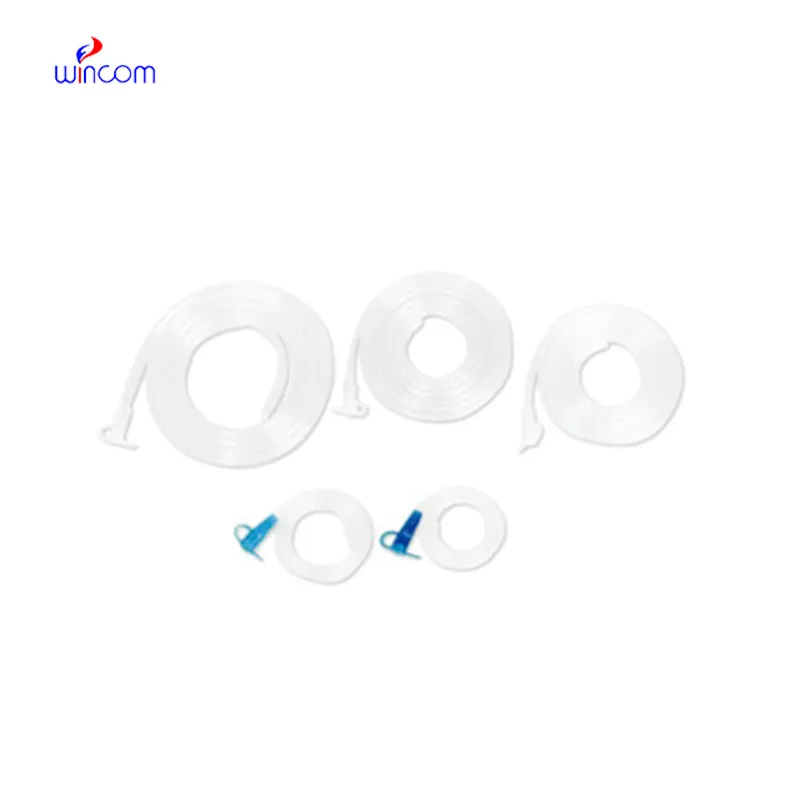
Our product, Feeding Tube F4-F20, is relevant for customers looking for medical tube solutions across a range of sizes. This makes it especially useful for buyers who serve diverse clinical needs or manage multi-department procurement.
One of the reasons the body connecting tube is widely used is that it fits naturally into daily patient care routines. In clinical settings, efficiency often depends on whether simple procedures can be carried out without difficulty. A practical tube product supports that goal.
In hospitals and nursing environments, routine care frequently involves supportive transfer or feeding-related tasks. A body connecting tube helps support these procedures by serving as a practical connecting component in daily care activities.
As suggested by the product type, feeding-related use is one of the important scenarios for this kind of tube. In settings where controlled transfer is needed, a properly selected tube supports smoother operation and more organized procedural handling.
Not all medical tubing needs are long-term. Some departments and facilities require tube products for temporary or procedure-based applications. In such cases, a body connecting tube offers practical value as a standard medical consumable that can support routine procedural requirements.
For clinics and hospitals, this kind of day-to-day usability is one of the main reasons such products remain essential.
While body connecting tubes are commonly associated with clinical use, their value is not limited to hospitals and bedside care. Research institutions, educational laboratories, and training centers may also require medical-grade tube products for controlled use scenarios.
In laboratory or institutional environments, transfer-related tasks often require reliable tubing options. Depending on the setting, a body connecting tube may be relevant for controlled handling or other practical workflows where medical tubing products are needed.
Medical and educational institutions often carry out demonstration or training activities. In these environments, tubing products may be used to support teaching, simulation, or familiarization with procedural equipment and consumables.
Research and training institutions may not always need a single size only. The ability to source multiple size options from one supplier can improve convenience and simplify procurement planning. This is one reason why products with a broader size range are attractive to institutional buyers.
By extending beyond standard clinical use, the body connecting tube becomes relevant to a larger international customer base, including laboratories and teaching facilities.
One of the most practical advantages of the linked product is its size range from F4 to F20. This matters because different procedures, patient groups, and institutional requirements may call for different tube sizes.
For hospitals, a broader range helps support different departments and care needs. For clinics, it improves flexibility when serving different patient situations. For distributors, it allows a single product line to meet a wider range of market demands. For laboratories and training institutions, it offers more options for varied demonstration or controlled-use purposes.
A wider size range also helps simplify sourcing. Instead of purchasing multiple related products from different suppliers, buyers may prefer to work with one source that offers broader specification coverage. This can save time, improve stock planning, and support more efficient procurement management.
In international trade, adaptability is often just as important as function. A product that serves more than one size requirement naturally has stronger commercial value.
For professional buyers, basic usability is only the starting point. Hospitals, clinics, laboratories, and medical distributors also look at broader supply factors before choosing a product.
One of the most important concerns is consistency. Repeat orders need dependable specifications so that buyers can manage ongoing supply with confidence. Another key factor is ease of handling, since medical consumables should support practical workflow rather than create additional complexity.
Buyers also care about packaging, export readiness, and supplier responsiveness. International procurement involves communication, documentation, shipping coordination, and order planning. A product may be suitable technically, but if supply support is weak, purchasing becomes more difficult.
That is why many overseas customers prefer to work with experienced exporters who understand medical and laboratory supply requirements. The right product should not only function well, but also fit the realities of institutional purchasing.
If you are looking for a practical body connecting tube or feeding tube for hospital, clinic, laboratory, or distribution use, we invite you to explore our product offering.
Our Feeding Tube F4-F20 is suitable for buyers seeking medical tube products with flexible size options and broad application relevance. Whether you are sourcing for patient care, routine clinical handling, institutional procurement, or international distribution, this product offers practical value for a wide range of users.
Learn more here: feeding tube f4-f20
If you have target size requirements, market needs, or planned purchasing volume, feel free to contact us with your inquiry.
The body connecting tube may appear to be a simple medical consumable, but its practical value is broad. In both clinical and research settings, it supports connection, transfer, feeding-related procedures, and institutional handling tasks that require dependable tubing solutions.
Its versatility comes from its adaptability to multiple environments, user needs, and specification requirements. For hospitals, clinics, laboratories, and distributors, this makes it a useful and commercially relevant product. And for international buyers, sourcing from a professional medical export supplier can make procurement more efficient and more reliable.
If your organization is looking for body connecting tube or feeding tube supply, we welcome your inquiry.
A body connecting tube is used for connection, transfer, feeding-related procedures, and other supportive care or handling tasks in clinical and institutional settings.
Yes. In addition to clinical use, they may also be relevant in laboratories, training centers, and research institutions for controlled handling, demonstration, or simulation-related purposes.
Different procedures and users may require different tube sizes. A broader size range, such as F4-F20, gives buyers more flexibility and helps simplify procurement.
Common buyers include hospitals, clinics, laboratories, nursing institutions, medical distributors, and international healthcare procurement companies.
You can view the product details here: feeding tube f4-f20
E-mail: [email protected]
Tel: +86-731-84176622
+86-731-84136655
Address: Rm.1507,Xinsancheng Plaza. No.58, Renmin Road(E),Changsha,Hunan,China


 EN
EN
 af
af
 es
es
 ar
ar
 tr
tr
 sw
sw
 pt
pt
 th
th
 ur
ur
 bn
bn
 ne
ne
 vi
vi
 km
km
 lo
lo
 de
de
 ru
ru
 fi
fi
 nl
nl
 fa
fa
 fr
fr
 ko
ko


