
Blog
In modern scientific research and medical diagnostics, the ability to “see the unseen” is not a luxury—it is a necessity. Microscopic observation has become the mainstay of laboratory and healthcare work, ranging from the identification of cellular abnormalities to guiding clinical decisions. The Microscope has, undoubtedly, been the major contributor to the impossibility of many breakthroughs in biology, pathology, and clinical medicine.
With its powerful analytical capability, the Microscope is the one that draws the line between theory and evidence. It is the instrument that allows many professionals in labs, hospitals, and clinics to observe the finest details of the structures that could be previously viewed only by an expert in a dark room. However, in this quest for clarity, the different types of microscopes available in the market each have a different role. Different applications necessitate different optical principles, configurations, and performance levels.
In the following article, we plan to give a brief overview of the five basic types of microscopes that every scientist and medical practitioner ought to know. By explaining their functions, astrological advantages, and ideal use cases, we hope our readers will be able to make educated choices when purchasing equipment.
The optical microscope, or light microscope, is the most common imaging device used in scientific and medical practice. Its working principle is based on visible light going through or being reflected off a specimen, and the image is formed by lenses that magnify it.
In engineering labs, hospitals, and routine diagnostic settings, the microscope aids in the rapid examination of samples like tissues, fluids, and prepared slides. Its simple design makes it possible for the users to get quick results without much technical training.
One of the significant advantages of an optical microscope is its accessibility. Less acquisition costs, easy maintenance, and user-friendly operation give it a place in high-throughput environments. However, it also has some limitations by nature. The wavelength of visible light limits magnification and resolution, so the microscope is unable to disclose ultra-fine cellular details.
Even with these limitations, the optical microscope is still very important in preliminary analysis, education, and standard clinical workflows.
A compound Microscope is the next big thing in the world of optics. It takes advantage of the typical optical principles, whereby it uses more than one lens, and the lens usually used will be an objective lens and an eyepiece, to get magnification to a higher degree and at the same time better resolution. This arrangement gives the operators the chance to see even the minutest details of the cellular and subcellular structures, which is far more detailed than previous methods.
The Compound Microscope systems are extensively used in the fields of cytology, microbiology, and pathological studies. It offers the professionals to have a clear view over the microorganisms, blood corpuscles, and even slices of tissues that are being used for research or diagnostics, thus fostering the accuracy of research and the confidence in diagnostics.
The compound Microscope offers the highest performance of imaging and comparisons with a basic optical Microscope. There is a wide range of magnification and highly refined optics which allow the user to see even the most delicate morphological features that are vital for disease detection and scientific breakthroughs.
While selecting a compound Microscope, the teams that are responsible for procurement should take into account the resolution specifications, the quality of the objective lens, and the illumination systems. LED light sources, adjustable condensers, and precise focusing devices are equally important for image retention, long-term use, and reliability as these facets.
The stereo Microscope, which is also known as a dissecting Microscope, has one very thing that it can offer: the ability to see objects in three dimensions. It is the opposite of the compound system that combines the images and uses one optical path; this Microscope uses two different optical paths for each eye and, therefore, creates the depth perception that is so important for hands-on work.
Stereo Microscope units are predominantly used in dissection, sample preparation, and industrial inspection. In the labs, they are a part of the processes that require interaction with the specimen, such as sorting samples or making slides.
One of the main differences between a stereo and compound Microscopes is magnification and working distance. Stereoscopic ones deliver lower magnification, yet, they provide a wider field of view and more space between the lens and the sample. The design allows wearing of gloves and working freely with high precision at the same time as it reduces the risk of sample damage.
Devices of stereo Microscope type stand where Laboratories dealing directly with physical samples or doing preparatory work need to be placed in order to receive the highest level of convenience and control possible.

The fluorescence Microscope is a mighty analytical device that can precisely locate certain molecules in a sample. It does so by using luminous dyes or markers and capturing the light that is emitted and is very specific to the associated structures.
Fluorescence Microscope systems are major instruments in the molecular biology, cancer research, and high-quality diagnostics fields. They make it possible for researchers and doctors to see things like proteins, DNA, or mutated cells that are not visible with the use of regular light.
The state-of-the-art fluorescence Microscope models usually include the option of multi-channel imaging, which allows for the parallel viewing of different markers. It becomes very crucial to choose the suitable filter sets and light sources in order to get the most precise signal detection.
When it comes to financing, it is very important to find a way to keep the budget within the limits imposed by the required functions. Although the most sophisticated configurations have large capabilities, the users should first be sure that their needs for research or diagnosis match the amount spent on them.

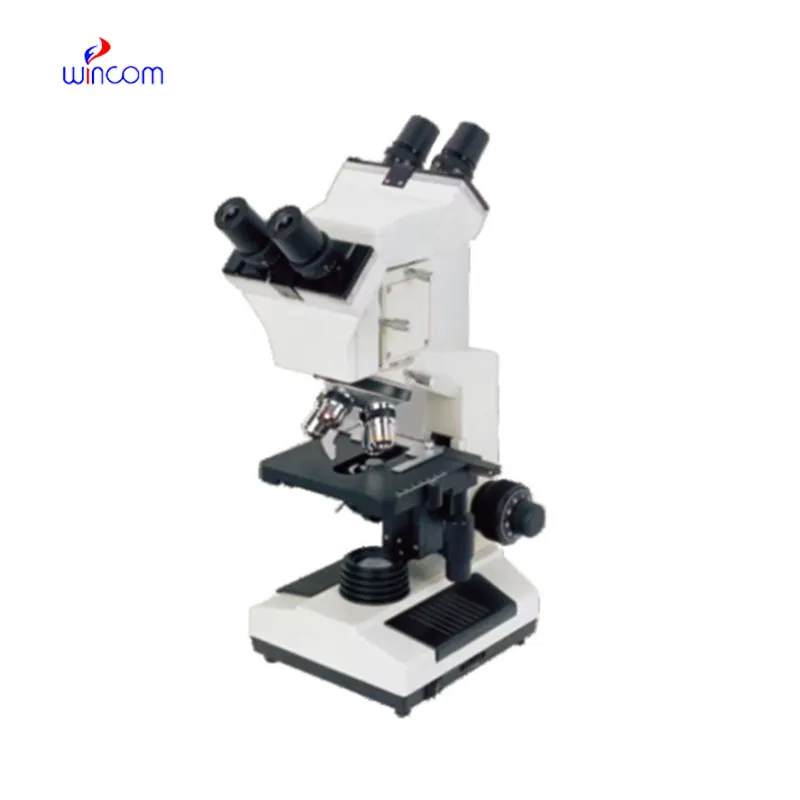
In teaching hospitals, laboratories, and clinical training centers, collaborative observation is increasingly important. A multi-viewing Microscope enables two or more users to observe the same specimen simultaneously, ensuring consistency in interpretation and improving communication.
The Multi Viewing Microscope (2 Persons) is designed specifically for shared observation environments. Key advantages include:
Compared with single-user systems, a multi-viewing microscope improves diagnostic accuracy during consultations and accelerates training outcomes. It is particularly suitable for medical education institutions and laboratory teams conducting joint evaluations.
Selecting the appropriate Microscope begins with a clear understanding of application requirements. Research-focused laboratories may prioritize resolution and modularity, while clinical environments emphasize reliability and ease of use. Teaching institutions often benefit from collaborative viewing capabilities.
Budget considerations also play a decisive role. Entry-level Microscope models support routine tasks, whereas advanced systems provide enhanced performance at higher investment levels. Long-term value should be assessed alongside initial costs.
For international procurement, after-sales support and spare parts availability are essential. Reliable suppliers ensure consistent performance and reduce operational downtime.
| Microscope Type | Primary Use | Key Advantage |
|---|---|---|
| Optical Microscope | Routine observation | Cost-effective |
| Compound Microscope | Cellular analysis | High magnification |
| Stereo Microscope | Sample handling | 3D visualization |
| Fluorescence Microscope | Molecular detection | Target specificity |
| Multi-Viewing Microscope | Teaching & collaboration | Shared observation |
With extensive experience in exporting medical and laboratory equipment, we support global clients with professional procurement solutions. Our processes emphasize quality assurance, thorough inspection, and compliance with international standards.
Flexible logistics options and customs support ensure smooth delivery to laboratories, hospitals, and clinics worldwide. Our responsive customer service team provides timely assistance throughout the purchasing cycle.
The Microscope remains a cornerstone of scientific research and medical practice. Each type serves a distinct purpose, addressing specific observational challenges across disciplines.
By understanding these five essential Microscope categories, institutions can align equipment choices with operational goals. We encourage readers to explore the recommended multi-viewing option and initiate discussions to equip their laboratories for future discovery.
An optical or compound Microscope is commonly used for routine diagnostic work due to its reliability and ease of operation.
A multi-viewing Microscope allows instructors and students to observe the same specimen simultaneously, improving learning accuracy.
No. It is essential for molecular and specialized research but may not be required for standard diagnostic tasks.
A stereo Microscope provides three-dimensional views and a larger working distance, while a compound Microscope offers higher magnification.
Key factors include product quality, after-sales support, logistics capability, and supplier expertise.
E-mail: [email protected]
Tel: +86-731-84176622
+86-731-84136655
Address: Rm.1507,Xinsancheng Plaza. No.58, Renmin Road(E),Changsha,Hunan,China


 EN
EN
 af
af
 es
es
 ar
ar
 tr
tr
 sw
sw
 pt
pt
 th
th
 ur
ur
 bn
bn
 ne
ne
 vi
vi
 km
km
 lo
lo
 de
de
 ru
ru
 fi
fi
 nl
nl
 fa
fa
 fr
fr
 ko
ko


