
Blog
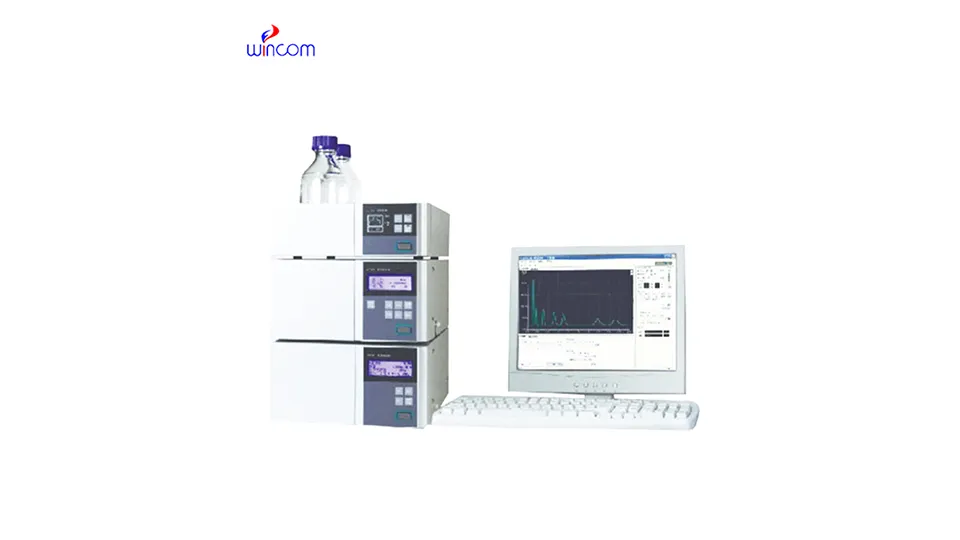
High performance liquid chromatography (HPLC) is an analytical technique using liquid as the mobile phase. It pumps a single solvent or mixed solvent, buffer and other mobile phases through a high-pressure infusion system into a chromatographic column, which contains a stationary phase. Within the chromatographic column, components in the sample are effectively separated due to different interaction forces with the stationary phase and mobile phase. Subsequently, these separated components enter the detector for detailed analysis, thereby achieving comprehensive analysis of the sample.
The principle is based on the difference in the distribution ratio of the mixture between liquid-solid or two immiscible liquids. This method is particularly suitable for the analysis of substances with high boiling points, difficult to vaporize, thermally unstable and biologically active. At the same time, high performance liquid chromatography has also shown widespread use in chiral analysis, providing important technical support for research in the fields of chemistry, biology and medicine.
Starting the equipment: First, turn on the power switches of the computer and the chromatograph in turn to start the instrument.
Log in to workstation: Log in to the liquid chromatography workstation to prepare for subsequent operations.
Configuration and parameter setting: After selecting the instrument configuration, make necessary parameter settings, such as mobile phase ratio, detector sensitivity, etc.
Instrument self-test and method establishment: Start the instrument self-test to ensure that the instrument is in good condition. After passing the self-test, establish corresponding methods based on experimental requirements.
System balance: Before starting data collection, ensure that the system is running under set conditions for a period of time to achieve a balanced state.
Data collection: When the baseline is stable, perform manual injection. Click the Start icon on the data collection interface to start collecting data. After collection, save the chromatography file.
Data analysis and report output: Select the data analysis function on the main interface and open the chromatography file for processing and analysis. After the analysis is completed, the report is output and the test is ended.
Shut down and cleaning: Before shutting down, let the machine run for enough time and fully wash the column with mobile phase to ensure that there is no residue before shutting down the machine.
Safe operation: Always avoid direct contact with your hands with the needle and areas that may come into contact with the sample to ensure personal safety and the cleanliness of the instrument.
Needle washing operation: Before aspirating a sample, the needle should be carefully washed with ethanol or methanol to remove possible impurities or residues.
Eliminate air bubbles: During the syringe sampling process, ensure that no air bubbles are mixed in. Air bubbles can be eliminated by pointing the needle upwards and flicking the needle tube while maintaining the appropriate suction speed.
Insertion speed and depth: Insertion should be rapid and stable to ensure that the speed and depth of each sample injection remain consistent, which is the key to ensuring the accuracy of analysis results.
Sample injection: When the needle tip is inserted into the vaporization chamber to the middle, sample injection should be started to ensure that the sample can be fully vaporized and effectively analyzed.
Check for air leakage: If it is found that the pressure of the gasification chamber drops, the peak shape becomes lower or the width becomes larger, it may be caused by air leakage. At this time, the sealing ring should be replaced in time to restore normal operation of the instrument.
Classification of injection needles: The injection needles of gas and liquid chromatographs cannot be mixed. Gas chromatographs use pointed needles, while liquid chromatographs use flat needles. Mixing can cause instrument damage or inaccurate analytical results.
Parameter stability: During the testing process, the stability of instrument parameters should be maintained and parameters should be avoided at will to ensure the accuracy of analysis results.
Data security: Do not use your own USB flash drive to copy data to ensure data security and integrity.
E-mail: [email protected]
Tel: +86-731-84176622
+86-731-84136655
Address: Rm.1507,Xinsancheng Plaza. No.58, Renmin Road(E),Changsha,Hunan,China


 EN
EN
 af
af
 es
es
 ar
ar
 tr
tr
 sw
sw
 pt
pt
 th
th
 ur
ur
 bn
bn
 ne
ne
 vi
vi
 km
km
 lo
lo
 de
de
 ru
ru
 fi
fi
 nl
nl
 fa
fa
 fr
fr
 ko
ko


