
Blog
Biosafety cabinets are indispensable equipment in laboratories, and the choice of their type is crucial. What types of biosafety cabinets exist, and what are the similarities and differences between them? The classification of biosafety cabinets mainly depends on their working methods and protection content. These classifications include Class I, Class II and Class III. Next, we will discuss these types of biosafety cabinets and their characteristics one by one.
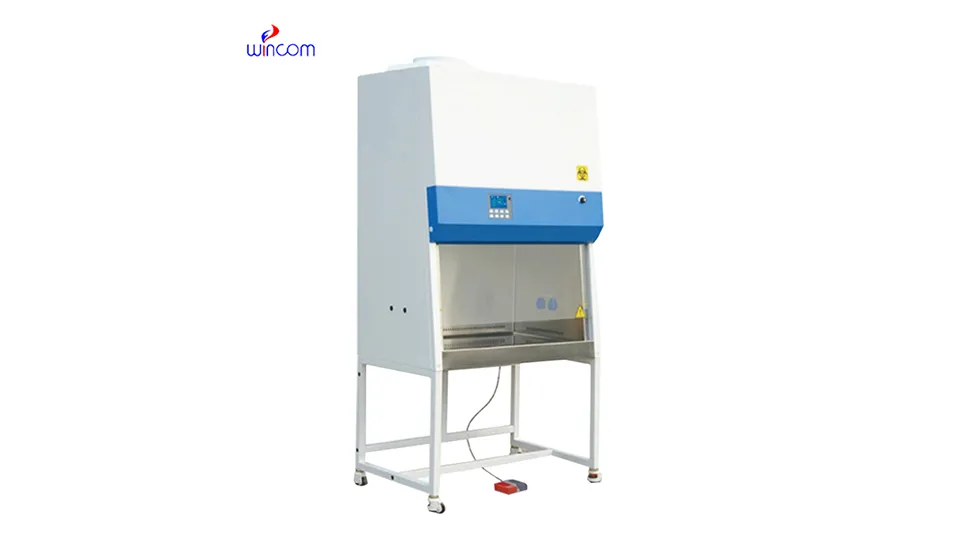
Class I biosafety cabinets focus on the protection of people and the environment, ensuring safety through uncirculated airflow and HEPA filter design. However, since such cabinets do not provide product protection against pollution, they may not be the best choice in environments where thorough pollution prevention is required. Its design ensures the safety of the operation process by keeping uncirculated air flow away from the operator. In terms of ventilation, Class I biosafety cabinets are similar to fume hoods, and both adopt a design with HEPA filter installed at the exhaust port to ensure the exhaust gas. Clean and safe.
Class II biosafety cabinets integrate personnel, product and environmental protection and are specifically designed for microbial operations or sterile agent preparation. It has an open front structure with inward airflow to ensure personnel safety, downward HEPA filtered laminar flow to protect products, and HEPA filtered exhaust gas treatment for environmental considerations. In addition, Class II biosafety cabinets are subdivided according to structure, airflow and exhaust systems, including A1, A2, B1, B2 and C1 types to ensure highly safe operation.
Type A1 Class II biosafety cabinets must maintain a minimum average inflow rate of at least 75 fpm when the sliding door is opened. Suitable for use in environments free of volatile chemical substances. This type of safety cabinet is suitable for experimental operations free of volatile toxic chemical substances and radionuclides. Some models may be equipped with positive pressure piping systems to suit specific needs.
Type A2 is suitable for biological agent operations that handle small quantities of hazardous chemicals and must maintain a minimum average inflow rate of 100 fpm when the sliding door is opened. Some of the air filtered through HEPA can flow back to the laboratory and is suitable for biological agent operations involving the processing of small quantities of hazardous chemicals, and can also be used with tracer amounts of radionuclides.
Type B1 is similar to Type A2 and is suitable for handling small amounts of toxic chemicals and radionuclides. When the sliding door is opened, it is necessary to maintain a minimum average inflow velocity of 100 fpm, emphasizing direct exhaust of gas, and is suitable for experimental operations involving trace amounts of toxic chemicals and trace amounts of radionuclides.
Type B2 is a 100% exhaust cabinet suitable for handling harmful chemical substances and radionuclides. It is characterized by that all air is directly discharged into the atmosphere without need to be recycled or returned to the laboratory, and is suitable for auxiliary operations in microbial applications.
Type C1 can be switched between circulation and exhaust modes and is equipped with a working area specifically designed for harmful vapors or radionuclides. Its flexible design allows for the conversion of two modes by simply connecting or disconnecting the exhaust port and recertification.
Class III biosafety cabinets feature a fully enclosed ventilated design and glove box structure that provides comprehensive protection against biosafety levels 1 to 4. Also known as the glove box, it is specially equipped with a transfer room for disinfecting the materials leaving the glove box.
Class III biosafety cabinets provide comprehensive safety guarantees for laboratory operations with their unique design and efficient filtration system. Its completely enclosed ventilation path, combined with a sealed structure and rubber gloves, ensures absolute safety of operations in the cabinet. The transfer room and dual HEPA filtration system strictly disinfect the materials leaving the glove box, effectively preventing the risk of cross-contamination. Whether it is work requirements of biosecurity levels 1 to 4, Class III safety cabinets can easily respond to, providing laboratory personnel with the most reliable safety guarantee.
E-mail: [email protected]
Tel: +86-731-84176622
+86-731-84136655
Address: Rm.1507,Xinsancheng Plaza. No.58, Renmin Road(E),Changsha,Hunan,China


 EN
EN
 af
af
 es
es
 ar
ar
 tr
tr
 sw
sw
 pt
pt
 th
th
 ur
ur
 bn
bn
 ne
ne
 vi
vi
 km
km
 lo
lo
 de
de
 ru
ru
 fi
fi
 nl
nl
 fa
fa
 fr
fr
 ko
ko


