
Blog
Neonatal intensive care units (NICUs) manage some of the most fragile patients in modern healthcare. Premature infants and critically ill newborns require precise medication dosing, strict fluid management, and constant monitoring. Because of these challenges, Optimizing Standardized Neonatal and Infant Continuous Infusion Concentrations Based on Intravenous Infusion Pump Data has become an important clinical strategy worldwide.
Continuous intravenous (IV) infusion therapy is commonly used in neonatal and pediatric care to deliver life-saving medications and nutritional support. However, variations in drug concentration, pump settings, and workflow processes can increase the risk of medication errors. By combining standardized infusion concentrations with infusion pump data analysis, hospitals can dramatically improve medication safety and clinical efficiency.
Neonates require extremely precise medication administration. Even a minor deviation in dosage can have significant consequences due to their small body weight and developing organ systems.
In neonatal care, patients may weigh less than 2 kilograms. Medication dosages must therefore be calculated with exceptional accuracy. Continuous infusion therapy is often used for drugs that require steady blood concentrations over time.
Common medications delivered via continuous IV infusion include:
Because these medications are administered continuously over extended periods, infusion accuracy is critical.
When hospitals use inconsistent drug concentrations, several problems can arise:
Research indicates that standardized infusion concentrations decrease medication errors while enhancing treatment consistency in NICUs. Healthcare institutions have made standardized infusion protocols their primary focus because of this reason.
Hospitals use infusion pump data to examine actual infusion patterns and develop better drug concentration methods because neonatal treatment has become more complex.
The development of smart infusion pumps has enabled hospitals to collect detailed usage data. The collected data allows for analysis, which leads to improved infusion protocols and better drug concentration outcomes.
Hospitals now use infusion pump data analytics to evaluate how medications are delivered in clinical practice. The historical infusion records allow clinicians to assess patterns that directly affect safety and operational efficiency.
Typical data points analyzed include:
The clinical pharmacists and NICU specialists use these metrics to determine the optimal medication concentration that will most effectively meet actual treatment requirements.
A recent clinical analysis evaluated 12 months of infusion pump data covering more than 4,000 infusion events in neonatal patients. The results delivered multiple important discoveries to researchers:
These improvements can significantly enhance both medication safety and clinical workflow efficiency.
When hospitals implement optimized infusion concentration protocols, they often achieve several benefits:
These improvements contribute to safer neonatal care environments and better patient outcomes.
Neonatal infusion therapy continues to present the highest technical difficulties in pediatric medicine despite the development of new medical technologies.
Neonatal patients require extremely small infusion rates for their medical treatment. The minimum flow rate for most cases reaches 0.1 mL per hour.
At such low rates, even minor fluctuations can affect drug delivery accuracy. This process demands precise operation from infusion pump systems, which need to be mounted securely.
All NICU patients must follow strict limits on their fluid consumption. This requirement proves critical for premature infants who face both kidney development challenges and respiratory system issues.
Clinicians must carefully balance:
Optimizing drug concentration helps achieve this balance while maintaining safe infusion volumes.
If infusion concentrations are not optimized, medication syringes may empty quickly. This can lead to:
Reducing syringe replacement frequency improves clinical efficiency and reduces potential medication disruptions.
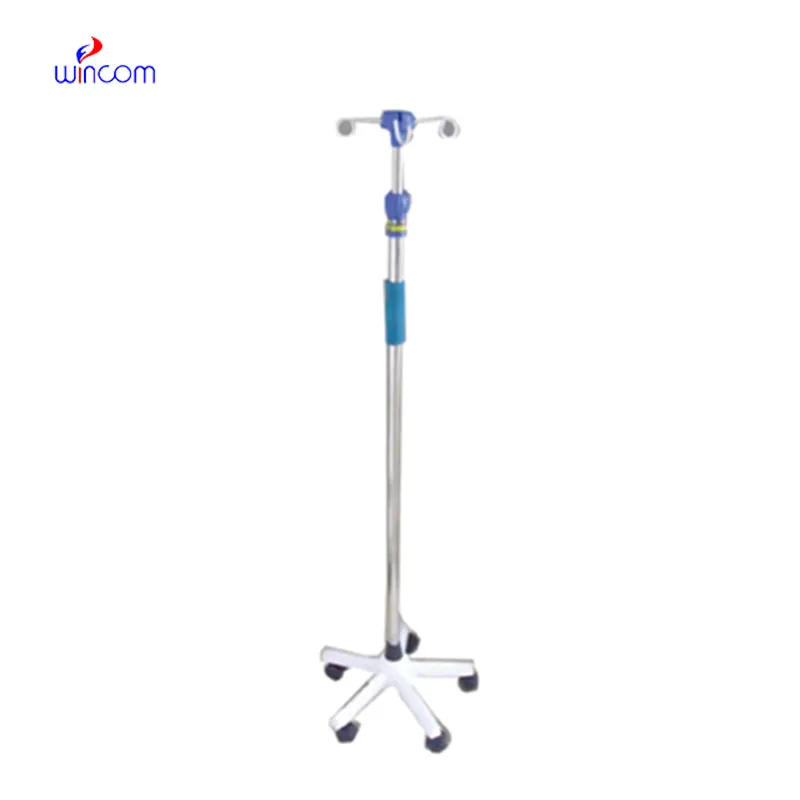
Continuous infusion therapy depends not only on infusion pumps but also on the supporting equipment used to mount and stabilize them.
Essential equipment used in NICU and ICU infusion therapy includes:
These devices must meet strict clinical requirements.
Key design features include:
Proper infusion pump support equipment ensures that pumps remain stable, visible, and easily accessible during patient care.
Hospitals with complex infusion therapy needs often require advanced pump mounting systems. One effective solution is the Infusion Support WN5-4, designed specifically for ICU and NICU infusion management.
The system supports the installation of multiple infusion pumps simultaneously. This configuration allows clinicians to manage several medication infusions efficiently in critical care environments.
The design is particularly suitable for:
The WN5-4 support structure is engineered with high-strength materials to provide excellent stability.
Its adjustable height allows clinicians to position pumps at optimal working levels, improving visibility and operational efficiency.
NICU environments are space-constrained due to the monitoring equipment and life-support systems used to treat each patient.
Hospitals can use a professional multi-pump infusion support system to manage their infusion equipment while they continue to operate their clinical activities securely.
The system works best in locations that require continuous infusion therapy to be delivered throughout the day:
The system provides stable support to infusion pumps, which ensures that medication delivery remains at a consistent rate.
Improving infusion safety requires a comprehensive strategy that combines clinical protocols, technology, and equipment design.
Healthcare institutions should focus on four key areas:
Establishing standardized drug concentrations simplifies infusion programming and reduces dosing errors.
Modern infusion pumps include drug libraries and safety alerts and dosing limits which help to prevent incorrect pump settings.
The equipment mounting system maintains its stability to prevent pump displacement while it enables better device handling during medical procedures.
Hospitals can analyze their infusion pump data on a continuous basis to discover better ways of functioning and improve their treatment processes.
The combination of these strategies enables hospitals to achieve better NICU medication safety and operational efficiency.
The selection process for infusion support equipment needs to be conducted correctly. The hospitals require specific equipment to handle their complex infusion therapy needs.
The healthcare evaluation process for infusion pump stands and support systems requires healthcare providers to assess the following five components:
The operational performance of infusion support systems improves through their ability to provide equipment stability while helping clinical teams operate their infusion therapy procedures more effectively.
The growing adoption of infusion pump data analytics now enables hospitals to use their analytic capabilities to calculate drug concentrations while creating safe medication delivery systems through data analysis.
By combining:
enables healthcare providers to develop safer and more effective neonatal infusion systems.
The Infusion Support WN5-4 solution establishes a dependable infrastructure that enables multi-pump infusion systems to operate continuously while providing clinicians with precise medication delivery capabilities.
The evolution of NICU care will depend on integrated infusion systems to enhance both clinical results and operational productivity.
Standardized infusion concentrations decrease medication calculation mistakes while making pump programming easier and establishing better drug delivery methods for neonatal patients.
Infusion pump data shows actual infusion rates, syringe usage, and dosing patterns, which hospitals can use to modify drug concentrations for safer and more effective treatment.
The main obstacles involve maintaining extremely low flow rates, implementing strict fluid limitations, and dealing with the need for multiple syringe changes, which result from small infusion amounts.
The most common equipment used for ICU and NICU continuous infusion therapy consists of syringe infusion pumps, IV poles, pump mounting stands, and multi-pump support systems.
A stable support system stops pump movement while it organizes multiple devices and enables better infusion therapy monitoring for clinicians.
E-mail: [email protected]
Tel: +86-731-84176622
+86-731-84136655
Address: Rm.1507,Xinsancheng Plaza. No.58, Renmin Road(E),Changsha,Hunan,China


 EN
EN
 af
af
 es
es
 ar
ar
 tr
tr
 sw
sw
 pt
pt
 th
th
 ur
ur
 bn
bn
 ne
ne
 vi
vi
 km
km
 lo
lo
 de
de
 ru
ru
 fi
fi
 nl
nl
 fa
fa
 fr
fr
 ko
ko


